
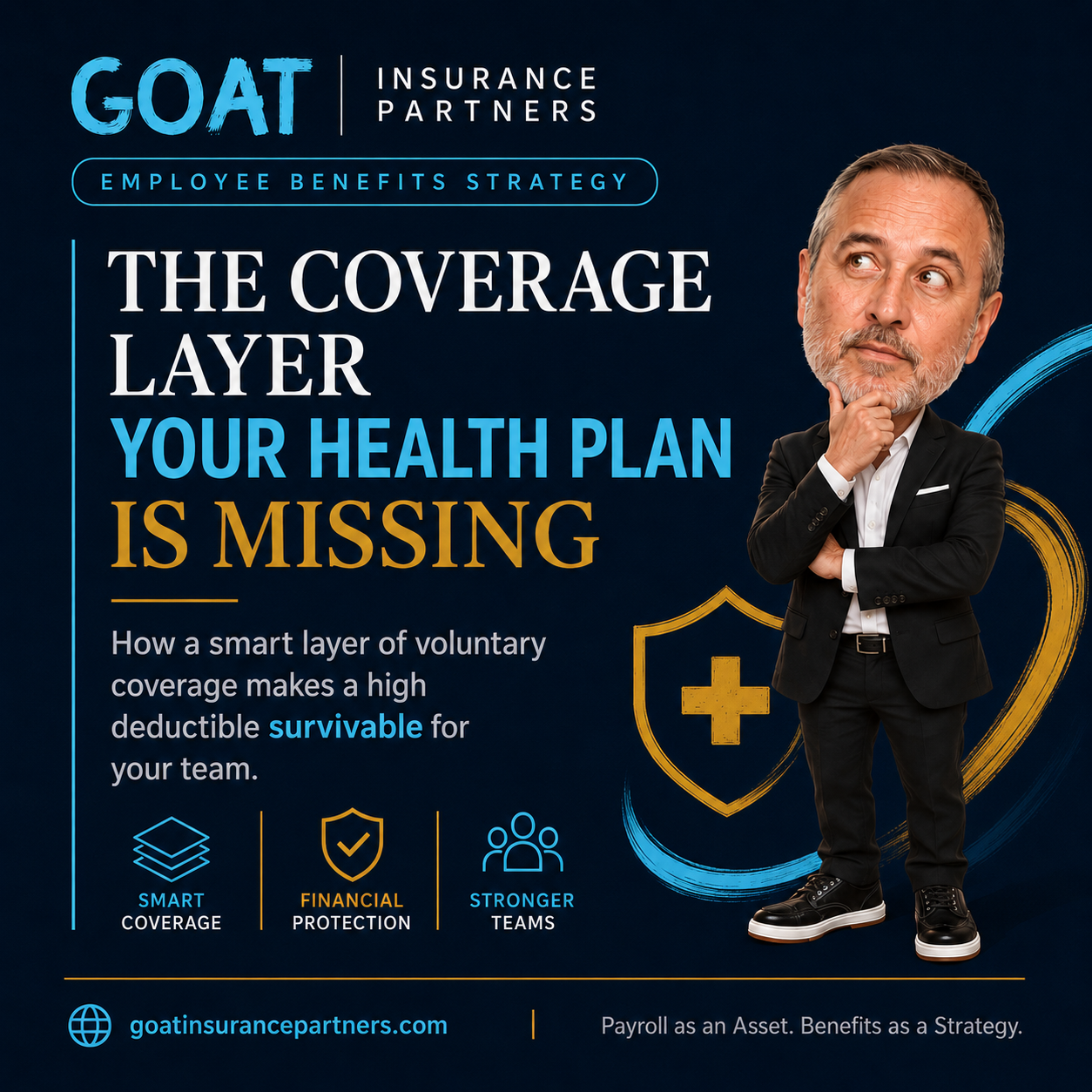
If you've shopped group health insurance for your Florida business in the last few years, you've felt the squeeze. To keep premiums in check, most employers have leaned harder on high-deductible health plans. They lower the monthly cost, which looks great on a spreadsheet. But there's a catch your employees feel the moment something goes wrong: a $4,000, $6,000, or even higher deductible they have to clear before the plan pays much of anything.
That gap between "I have insurance" and "I can actually afford to use it" is where a lot of financial stress lives. And it's exactly the gap a small, smart layer of voluntary benefits is built to close.
What "Gap Coverage" Actually Means
Voluntary benefits like hospital indemnity, critical illness, and accident insurance work differently from your major medical plan. Instead of paying doctors and hospitals directly, they pay your employee a fixed cash benefit when a covered event happens. Here's the plain-English version:
- Hospital indemnity pays a set amount for an admission and for each day of a hospital stay — cash the employee can use for the deductible, the mortgage, or childcare.
- Critical illness pays a lump sum (say $10,000 or $20,000) on diagnosis of something serious like a heart attack, stroke, or cancer.
- Accident insurance pays for the broken bones, ER visits, and stitches that come with active families and physical jobs.
The money goes straight to the employee, with no network restrictions and no wrangling over what's "covered."
Why This Matters More for Florida Employers
Florida runs heavy on industries with hourly and physically active workforces — hospitality, construction, agriculture, healthcare support, tourism. For those employees, a single hospital stay or accident can wipe out a paycheck cushion that was never very deep to begin with. When that happens, the fallout shows up at work as financial stress, missed shifts, and turnover.
The part business owners tend to love: these plans are usually employee-paid through payroll, so you can offer meaningful protection that strengthens your benefits package without adding much, or anything, to your own premium spend. Pair them with a Section 125 pre-tax arrangement and employees often pay for some of this coverage with pre-tax dollars, stretching their paycheck further.
Building It the Right Way
The goal isn't to bolt on every product a carrier sells. It's to look honestly at your actual health plan — the real deductible your team faces — and layer in just enough voluntary coverage to make that deductible survivable. Done well, your health plan finally feels affordable to the people using it, and your benefits become a genuine reason to stay rather than a line item.
Curious whether there's a coverage gap hiding in your current plan? The team at GOAT Insurance Partners can walk through your setup and show you exactly where employees are exposed — and what it would take to close it.
Key Takeaways
- High-deductible health plans lower premiums but can leave employees facing $4,000–$6,000+ before coverage meaningfully kicks in.
- Hospital indemnity, critical illness, and accident insurance pay cash directly to the employee when a covered event happens — with no network restrictions.
- These plans are typically employee-paid through payroll, strengthening your benefits with little or no added employer premium.
- Paired with a Section 125 pre-tax arrangement, employees can often pay with pre-tax dollars and stretch their paychecks further.
- The aim is just enough voluntary coverage to make the deductible survivable — turning a high-deductible plan into one your team can actually use.